

Insights
Monthly Commentary 2026
View more
Monthly Commentary 2025
View more
Monthly Commentary 2024
View more
Our Semi-Annual Newsletter
Green Private Wealth publishes semi-annual newsletters with our perspective on the market, as well as Green Team News, Upcoming Deadlines, Insights, Commentary and more. Our most recent Issues are available to download and read below about our financial advice.
The Ride
Life, Work, and Wealth
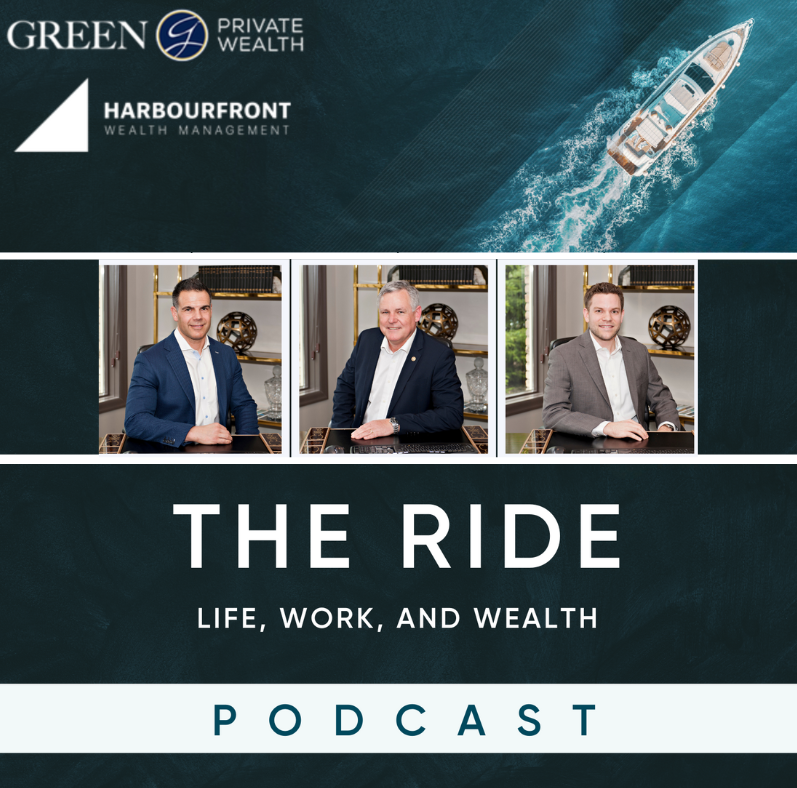
Listen in as Kris shares stories of how to live for today and plan for tomorrow!
In this podcast, Kris draws on his experience as not only a financial strategist and former firefighter and paramedic, but as a father who has experienced life-changing moments along the way.
It’s time to live the best possible life now with what you have since this is not a practice life or dress rehearsal. We never know when there will be no more tomorrows.
Listen in as Kris shares stories of how to live for today and plan for tomorrow!
Blog

For many high-income earners , market volatility often triggers emotional decisions that can undermine long-term financial success. Even individuals earning $150K–$500K+ annually, professionals, executives, business owners, and incorporated Canadians are not immune to making costly mistakes when markets fluctuate. Wealth creates opportunity, but it also introduces complexity. And during volatile periods, that complexity can lead to decisions that erode wealth, increase taxes, or disrupt long-term goals. This article explores the most common mistakes high-income Canadians make during market volatility and how proper planning can turn uncertainty into a strategic advantage. 1. Reacting Emotionally Instead of Strategically One of the most significant mistakes affluent investors make is reacting emotionally to short-term market shifts. During volatility, many high-income earners: Sell investments prematurely Move to cash at the wrong time Pause contributions when they should continue Chase “safer” options that limit recovery Emotion-driven decisions often lead to buying high and selling low , the opposite of effective investing. 2. Taking on Too Much Risk Because Income Feels Like a Safety Net Many high earners believe that a high income automatically protects them from investment losses. This can lead to: Overexposure to equities Concentration in one sector Riskier investment behaviour than their long-term strategy supports In periods of market volatility , this overconfidence can create substantial portfolio declines. The mistake is not in taking risks, it's in taking unbalanced risks without a coordinated plan. 3. Failing to Rebalance When It Matters Most Market volatility creates natural shifts in asset allocation. Without rebalancing, a portfolio can drift away from the appropriate level of risk. Common issues include: Equities are becoming overweight after market rallies Defensive positions are becoming too large after market declines Missed opportunities to buy assets at lower valuations High-income earners who do not rebalance consistently may face higher volatility and reduced long-term returns. 4. Neglecting Tax-Efficient Strategies During Uncertain Markets High-income Canadians often focus on investment performance but overlook the tax consequences of their decisions. During volatility, many fail to use tax-efficient strategies such as: Tax-loss harvesting Asset location optimization Capital gains planning RRSP contributions during down markets TFSA maximization opportunities Inefficient tax decisions can reduce lifetime returns more than market downturns themselves. 5. Concentrating Too Much Wealth in Employer Stock or a Single Sector High-income individuals, especially executives and professionals, often accumulate concentrated positions in: Employer stock Industry-specific investments Tech, finance, real estate, or energy During market volatility , concentrated positions magnify losses and increase long-term risk. Diversification is critical, yet frequently overlooked by affluent Canadians who feel “safe” in familiar industries. 6. Stopping Contributions or Savings During Market Declines One of the most common mistakes: pausing or reducing investments during downturns. High-income earners may delay: RRSP contributions Corporate investment deposits TFSA contributions Automatic monthly savings However, volatile markets often present the best buying opportunities . Stopping contributions means missing the chance to purchase investments at lower valuations. 7. Over-Analyzing Short-Term Market Trends High-income earners tend to be analytical and data-driven, which can lead to: Overconsumption of financial news Constant checking of portfolio performance Attempts to time the market Frequent portfolio adjustments This behaviour can create unnecessary stress and inconsistent decision-making. Markets reward discipline, not hyperactivity. 8. Ignoring the Role of Cash Flow Planning During volatile markets, many affluent Canadians fail to align investment decisions with their cash flow , tax situation , or retirement income plan . Mistakes include: Selling investments at a loss to fund lifestyle expenses Withdrawing from the wrong accounts Triggering unnecessary capital gains Not having a structured income strategy High-income earners often have multiple accounts, RRSPs, TFSAs, corporate accounts, and non-registered accounts, which require coordinated withdrawals and contributions. 9. Not Seeking Professional Guidance Early Enough Market volatility magnifies financial gaps. The biggest mistake many high-income earners make? Trying to navigate everything alone. Professionals help: Reduce emotional decision-making Improve tax efficiency Create balanced risk management Provide a long-term perspective Optimize corporate and personal investment structures Strengthen retirement planning Guidance from a professional Wealth Advisor or Investment Advisor can help high earners avoid costly missteps that may impact long-term financial goals. Conclusion For high-income Canadians , market volatility is not just a temporary disruption it is a test of discipline, planning, and financial structure. The most costly mistakes are avoidable when investors: Maintain perspective Coordinate decisions with tax and cash flow planning Manage risk intentionally Diversify properly Follow a long-term investment framework High earners have more to protect and more to lose during volatility. A disciplined, strategic approach ensures that short-term noise does not overshadow long-term opportunity Periods of uncertainty often trigger rushed decisions, unnecessary losses, or missed opportunities, especially for high-income earners managing larger, more complex portfolios. To help Canadians navigate volatile markets with confidence, we’ve created a free resource: The Market Volatility Checklist for High-Income Canadians Inside, you’ll find a clear, actionable guide that shows you: How to protect your investments during market swings What to review first when volatility increases Which mistakes high-income earners make—and how to avoid them The tax strategies that can improve returns even in uncertain markets How to strengthen your long-term financial plan Download your copy today and gain a step-by-step checklist you can use anytime markets become unpredictable.
For many high-income Canadians , earning $200,000 or more supports a comfortable and fulfilling lifestyle, one that includes travel , dining , experiences , real estate , and family support . But this lifestyle also comes with a financial reality many underestimate: Your retirement number must be significantly higher than the national averages. Most traditional retirement calculators are designed for Canadians earning $60K–$80K , not for affluent professionals, executives, or business owners living on $12,000–$20,000+ per month . A $200K+ lifestyle in retirement requires planning, tax efficiency, and coordination across multiple income sources. Without this clarity, many wealthy Canadians miscalculate how much they truly need and how long their assets will last. This guide explores how a $200K lifestyle affects your retirement number and the key planning considerations that matter most. 1. Your Retirement Spending Will Not Drop as Much as You Expect Many Canadians assume their spending will decline after they retire. For those living a $200K+ lifestyle , spending typically remains steady for at least the first decade. Common lifestyle expenses include: Travel Property maintenance or cottage expenses Dining , memberships , and leisure activities Family support for adult children or grandchildren Wellness , private services, and personal care Home upgrades or renovations High-income earners rarely cut back their lifestyle at retirement. Spending often stays level or increases during the active years . This reality must be reflected in your retirement number . 2. A $200K Lifestyle Often Requires $4M–$6M+ in Investable Assets A general benchmark for maintaining a $200K annual lifestyle is: $4 million–$6 million in diversified, well-structured investments A tax-efficient withdrawal plan Coordinated income strategies across accounts Your required asset level will depend on: Longevity Investment strategy Tax planning Inflation exposure Healthcare costs Real estate decisions A high lifestyle requires a higher income stream, and even small inefficiencies can shorten the lifespan of your portfolio. 3. Taxes Have a Larger Impact Than Most People Realize A $200K lifestyle requires $200K after tax, not before. This means your withdrawals often need to be $250K–$350K , depending on: RRIF withdrawals CPP and OAS The OAS clawback Pension income Corporate distributions Non-registered investment income This is where many high-income Canadians underestimate their retirement number . Your plan must account for both lifestyle spending and the taxes required to fund that spending. 4. Inflation Hits High-Lifestyle Retirees Harder Inflation affects everyone, but those with a $200K+ lifestyle feel it more intensely. A 3% inflation rate turns: $200,000 into $268,000 in 10 years $200,000 into $359,000 in 20 years Frequent travel, private services, dining, home care, and multi-property expenses amplify inflation’s impact. Without inflation protection, a long retirement can strain even well-funded portfolios. 5. Longevity Means Funding 30–35 Years of Retirement Affluent Canadians tend to live longer due to: Better healthcare Healthier lifestyles Lower stress Higher quality of life A longer lifespan increases: total years of spending impact of market volatility long-term inflation exposure Risk of healthcare and long-term care costs Your retirement number must support a plan that lasts three decades or more . 6. The First 10 Years Will Be Your Most Expensive The active years, typically ages 60 to 70 or 75, are when retirees: Travel more Spend more on lifestyle Support family Pursue hobbies or passion projects Renovate or relocate For many wealthy Canadians, maintaining a $200K lifestyle can easily become $225K–$250K during the early retirement phase. Your retirement plan must account for this increased spending. 7. Investment Strategy Must Shift From Growth to Coordination For a $200K+ lifestyle, the risk isn’t just market performance it is poor coordination across accounts. Your investment and income plan must integrate: Tax-efficient withdrawals Coordinating RRIF , TFSA , non-registered , and corporate income Managing OAS clawbacks Smoothing taxable income Managing RRIF minimums Targeting lifetime tax reduction , not just annual tax reduction This level of coordination is essential for preserving wealth. 8. Healthcare and Long-Term Care Must Be Planned For Wealthy Canadians often choose private healthcare and in-home care , leading to higher long-term costs. Expenses may include: Private nursing In-home care Assisted living Specialist care Accessibility renovations These rising costs affect your retirement number and long-term sustainability. So What Is Your Retirement Number? Your specific number depends on: Current lifestyle spending Expected changes in lifestyle Tax structure Income sources RRIF projections TFSA balances Investment returns Inflation Healthcare needs Real estate plans Family responsibilities For most Canadians maintaining a $200K lifestyle, the required retirement assets typically fall between: $4M–$6.5M+ in investable assets But your exact number is unique and requires a coordinated plan. Download the First 10 Years of Retirement Planning Workbook If you want clarity on: What your first 10 years of retirement will cost Whether your investments support a $200K lifestyle How taxes affect your retirement number How inflation and longevity shape long-term sustainability Whether your withdrawal strategy is structured properly Then this workbook is for you. The workbook includes: A 10-year income outline A lifestyle and spending projection guide A tax and withdrawal strategy map Inflation and longevity planning tools Healthcare and long-term care considerations A checklist of high-income retirement risks Download your copy today and build a retirement plan aligned with the lifestyle you want to sustain.

For many wealthy Canadians, retirement planning is no longer about building savings. The real challenge is recognizing and preparing for the risks that often remain hidden until retirement begins. These risks do not appear on a statement, yet they can influence long-term financial security, lifestyle stability, and the ability to maintain wealth across decades. A retirement strategy that acknowledges these overlooked risks allows your investment plan, tax plan, income plan, and estate plan to work together with greater resilience. Without this awareness, even affluent Canadians may experience financial surprises during the most important years of retirement. This guide outlines the key retirement risks that high-net-worth individuals often overlook, along with the strategic considerations that support long-term peace of mind. 1. Start by Understanding Your Retirement Tax Exposure One of the most common misconceptions among high-income Canadians is that their tax rate will naturally decrease in retirement. In many cases, the opposite occurs. Retirement income typically comes from multiple taxable sources , including RRIF withdrawals , CPP , OAS , pension income , and non-registered investment income . When these sources overlap, they can push retirees into a higher tax bracket and may trigger the OAS clawback . This is known as Retirement Tax Risk , the risk that your taxable income in retirement may be higher than expected. Without planning, mandatory RRIF withdrawals and ongoing investment income can increase your lifetime tax burden. Understanding this risk early allows for better coordination of income sources and greater control of taxation throughout retirement. 2. Prepare for Longevity and a Longer Retirement Timeline Affluent Canadians often experience longer life expectancy due to access to quality healthcare and lifestyle advantages. A retirement lasting 25–35 years is increasingly common. A longer retirement horizon amplifies the importance of: Portfolio sustainability Long-term income planning Inflation adjustments Future healthcare considerations A plan that does not account for extended longevity may underestimate long-term spending needs and investment requirements. 3. Account for Sequence of Returns Risk Sequence of returns risk refers to the impact of market performance during the early years of retirement. If markets decline while withdrawals begin, the portfolio may have less capacity to recover, even with strong long-term averages. Affluent households with larger portfolios can be disproportionately affected, as early-withdrawal timing plays a significant role in long-term sustainability. Managing this risk requires thoughtful income distribution and investment planning during the initial retirement phase. 4. Consider the Impact of Inflation on Long-Term Spending Inflation gradually reduces purchasing power, and its impact compounds over time. For wealthy Canadians who often maintain higher lifestyle spending, such as travel, home maintenance, private services, and multi-property ownership, the effect of inflation becomes more significant. Inflation influences: annual withdrawal needs long-term cost projections The sustainability of investment income Retirement plans should incorporate a realistic inflation assumption to support a stable standard of living. 5. Recognize the Spending Pattern of the First 10 Years of Retirement Many retirees experience higher spending during the early years of retirement, often referred to as the “active years.” This period typically includes increased travel, lifestyle upgrades, renovation projects, or support for family members. While this pattern is expected, an unstructured approach may accelerate the drawdown of assets and affect future retirement phases. Mapping anticipated spending during the first decade is essential for long-term alignment. 6. Prepare for Healthcare and Long-Term Care Needs Healthcare needs often increase with age, and private care options such as in-home support, assisted living, and medical specialists can be significant expenses for affluent households. These costs are frequently underestimated, yet they play a major role in long-term planning. A retirement plan should consider: projected medical expenses long-term care preferences funding strategies for future care needs 7. Address Concentration Risk Within Investments or Assets Many high-net-worth Canadians accumulate wealth through concentrated holdings such as business ownership, real estate, or specific industries. While this may build wealth effectively, it can increase vulnerability in retirement. A well-diversified portfolio reduces exposure to market or sector-specific downturns, supporting more stable retirement income. 8. Develop a Coordinated Withdrawal Strategy Withdrawal sequencing, determining which accounts to draw income from and in what order is one of the most significant drivers of tax efficiency and long-term portfolio sustainability. A strategic approach considers: RRIF withdrawal timing TFSA tax-free income Non-registered investment drawdowns Corporate distributions (for business owners) CPP and OAS coordination Proper sequencing helps minimize taxes, preserve government benefits, and extend the longevity of retirement assets. 9. Strengthen Estate Planning to Reduce Complexity Estate planning for affluent families involves more than distributing assets. It includes managing: capital gains exposure probate fees ownership structures inheritance planning tax-efficient transfer strategies Comprehensive estate planning ensures clarity, protects beneficiaries, and reduces the administrative and financial burden on the next generation. Why Wealthy Canadians Must Focus on the First 10 Years of Retirement The first decade of retirement is a defining period. Decisions made during this time influence the decades that follow, affecting taxes, investment growth, spending capacity, and long-term flexibility. Addressing retirement risks early provides retirees with greater clarity and confidence, ensuring that their wealth supports both their lifestyle and future objectives. Download the First 10 Years of Retirement Planning Workbook To support retirees in navigating this critical period, we created the First 10 Years of Retirement Planning Workbook , a structured resource designed to help affluent Canadians plan with intention. The workbook includes: A 10-year income and withdrawal outline A tax and cash-flow planning framework A lifestyle and spending projection guide An inflation and longevity planning section A healthcare and long-term care preparation page A checklist of the major overlooked retirement risks Download your copy of the First 10 Years of Retirement Planning Workbook to begin organizing the decisions that will shape the next stage of your financial life.

high-income Canadians, wealth, unnecessary taxation, tax-efficient retirement plan, earning years, transition years, distribution years, higher taxes in retirement, tax-efficient retirement strategy, Retirement Tax Risk, RRIF withdrawals, CPP, OAS, non-registered investment income, higher tax bracket, OAS clawback, RRS

Learn how the FHSA helps Canadian first-time buyers save tax-free for a home deposit, including key rules and benefits.

Review how markets have performed so far in 2025, what risks to watch, and how Green Private Wealth is adjusting portfolios to stay ahead.

Learn the key differences between tax deductions and tax credits. Discover how each can impact your tax return and which might offer greater savings.

Explore how Green Private Wealth protects your digital assets with cyber security strategies. Stay safe from online threats while managing your finances.

Explore the benefits of a Registered Education Savings Plan (RESP) and how it can support your child’s future education.

Copyright by Green Private Wealth of Harbourfront Wealth Management Inc. All Rights Reserved. No portion of this site may be replicated without permission. Harbourfront Wealth Management Inc. is a member of the Canadian Investor Protection Fund and the Canadian Investment Regulatory Organization (CIRO).